 Sustainability
Initiatives for Certain Stakeholder Groups Human Capital
- Clients
- Consumer Research Panels
- Human Capital
- Partner Companies
Health management promotion policy
The Macromill Group implements initiatives to support each employee in maintaining a high level of health awareness and balancing their life stages with work while preserving their physical and mental health. Furthermore, through this, we aim to be a company trusted by our employees as one where they can work healthily and for the long term, and one where they can work with peace of mind even as their life stages change—a company that continues to be chosen by talent.
Senior Executive Officer
CLO & CHRO
Chief Health Management Promotion Officer
Takashi Sasaki
About the health management promotion system
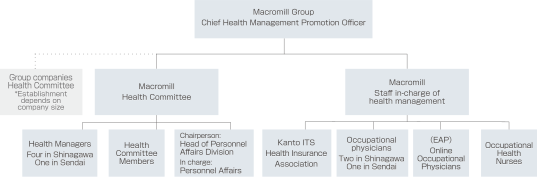
The Macromill Group has established a new collaborative framework not only within the Company but also with external organizations to promote health management. The executive officer who is head of Corporate serves as the Chief Health Management Promotion Officer, and occupational physicians specialized in psychosomatic medicine and occupational health nurses have been assigned internally. In terms of external organizations, we have established an EAP hotline and strengthened collaboration with the health insurance association to implement initiatives aimed at improving health-related issues.
Achievements of health management initiatives
*New initiative (since April 2024)
| Expansion of health promotion structure |
|
|---|---|
| Improving health literacy |
|
| Strengthening prevention measures for injury and illness in personal time |
|
| Development of environments and systems |
|
Strategic map for promoting employee health
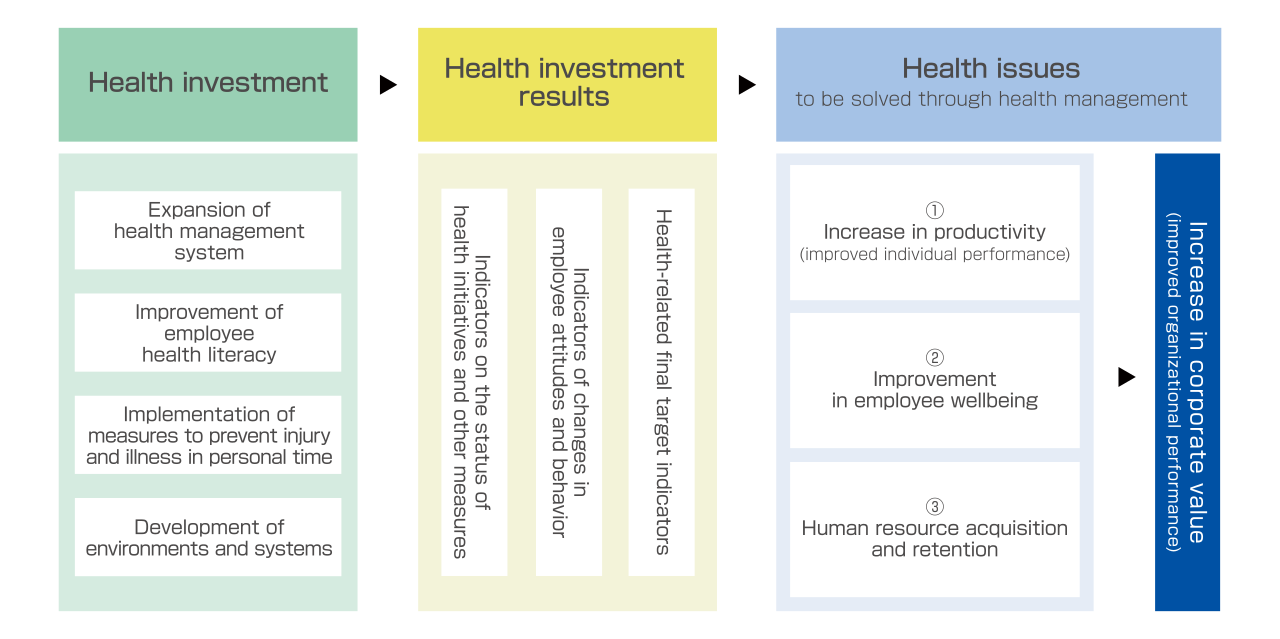
We have compiled a strategy map for the promotion of health management, which we check and analyze as necessary, and link to planned initiatives. In line with this strategy map, we have expanded the Health Committee, increased the number of occupational physicians, introduced occupational health nurses, and began EAP services. Going forward, we will continue to work on health management, using the PDCA cycle based on each indicator.
*Please scroll horizontally to view
Indicators for health management promotion
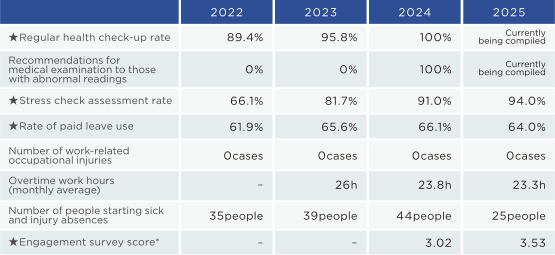
Health management KPI
- Regular health check-up participation rate: 100% ongoing
- Stress check participation rate: 95% or higher
- Rate of paid leave use: 70% or higher by 2028
- Engagement survey score: 3.83 by 2028
*“You believe the Company is advancing initiatives and creating an environment to promote employee health.”
Health Committee initiatives
2025 Health Committee agenda
(April 2024–March 2025)
| April |
|
|---|---|
| May |
|
| June |
|
| July |
|
| August |
|
| September |
|
| October |
|
|---|---|
| November |
|
| December |
|
| January |
|
| February |
|
| March |
|
Establishing a Diverse Working Environment
Promotion of Diversity and Inclusion
The Group believes that ensuring diversity and inclusion in the workforce continues to be vital in improving the value we bring to our clients as well as for meeting our corporate social responsibility goals.
Since 2015, we have been promoting diversity and inclusion with the aim of fostering an environment of mutual respect for differences in which all employees can live up to their full potential.
Trajectory of our initiatives
- Forming a support framework based on interviews with employees taking maternity or childcare leave
- Implementing educational activities aimed at balancing work and family care
- Reviewing of workforce environment for a diversity
- Multifaceted initiatives to promote the career path of female employees
(Developing and providing inventory tools for career development, setting up opportunities for dialogue across departments, publishing female employee interview articles internally, etc.) - Designing opportunities for collaboration between managers with female team members
In the latest employee satisfaction survey carried out in January 2025, many respondents agreed that “there is an atmosphere of recognizing diverse values” (TOP 2: 82.6%). Through consistent efforts to date, we have steadily fostered a culture of mutual respect and acceptance of diversity.
Participation in the Human Capital Management Survey
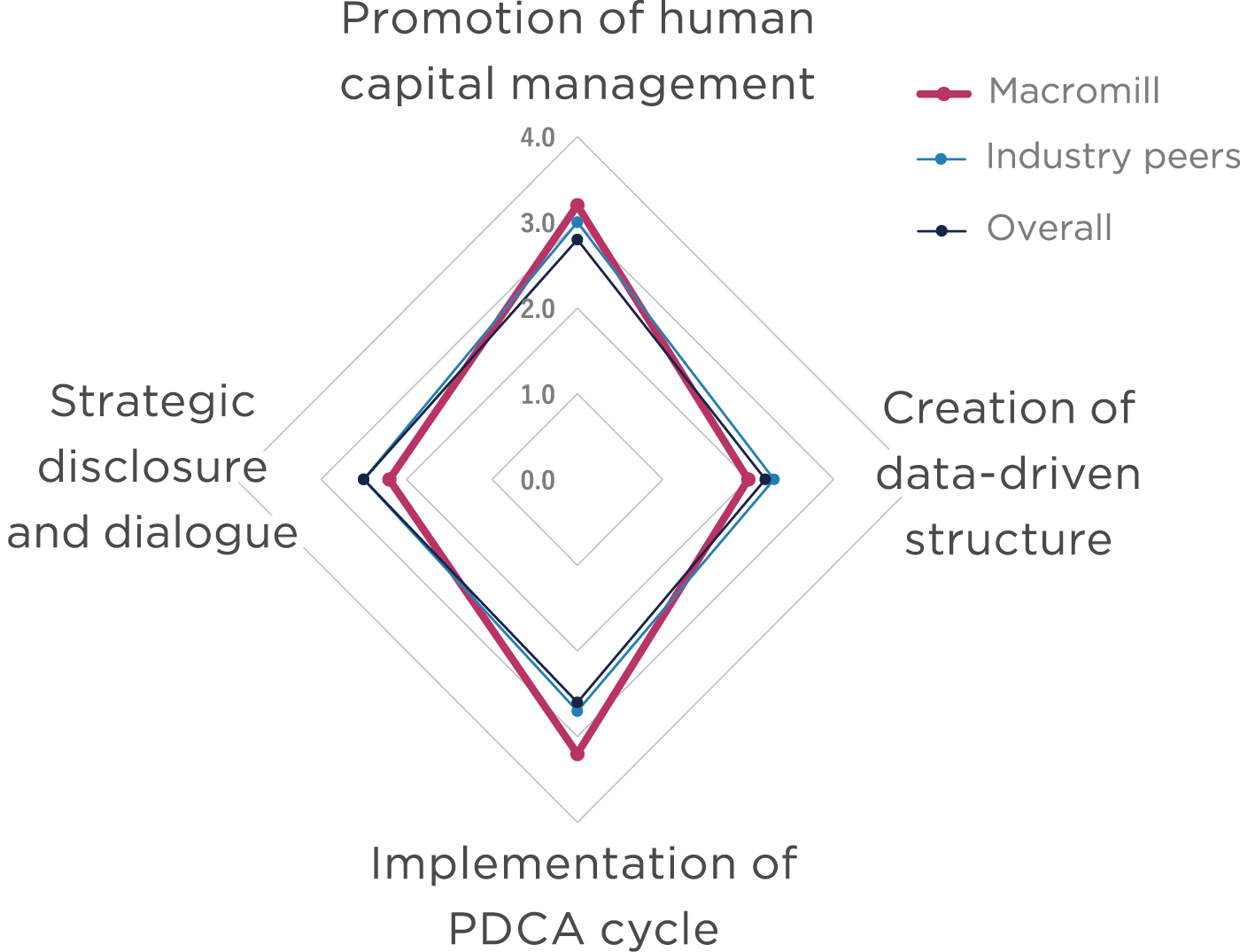
We participated in the Human Capital Survey 2024, a survey aimed at visualizing and raising awareness of ‘essential efforts to improve corporate value’, achieving a deviation value of 59. We will continue to work on strengthening human capital management and its disclosure with the aim of improving corporate value, including creating an environment in which a diverse workforce can flourish.
*Please scroll horizontally to view
| Major items | Macromill | Industry peers | Overall |
|---|---|---|---|
| Promotion of human capital management | 3.7 | 3.0 | 2.9 |
| Execution of human capital investment based on human resources strategy | 3.7 | 3.1 | 3.0 |
| Data-driven PDCA cycle | 3.0 | 2.8 | 2.6 |
| Strategic disclosure and dialogue | 3.3 | 2.7 | 2.7 |
Wage gap between men and women
The Company discloses the wage gap between men and women based on the Act on the Promotion of Women’s Active Engagement in Professional Life (Women’s Advancement Promotion Act).
[Wage gap between men and women]
| All workers | Regular workers | Part-time and temporary workers |
|---|---|---|
| 66.2% | 70.1% | 67.7% |
Initiatives to promote the greater participation of women
Since 2021, we have been focusing on promoting the greater participation of women. Our goal was to increase the ratio of female managers from 16% as of the end of June 2021 by 5%–10% by the end of July 2024, and ended up raising this figure by 9% increase to 25%. We will continue to step up efforts to promote women’s participation, targeting a ratio of female managers of 30% by the end of July 2030.
Ratio of female managers and new performance indicators
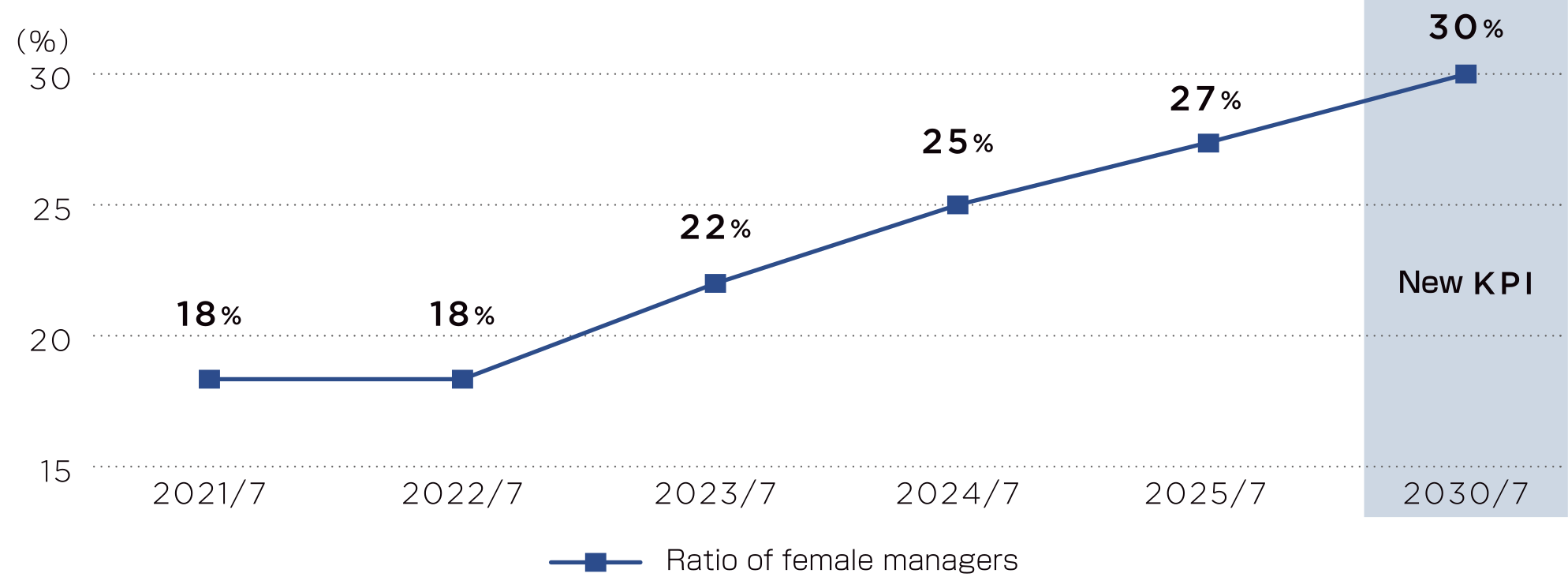
Ratio of female managers
and average age of managers
Macromill group employees (non-consolidated)
| 2021/7 | ||
|---|---|---|
| Non-consolidated | ||
| Ratio of female managers | 18% | |
| Average age of management personnel (years) | 38 | |
| 2022/7 | ||
|---|---|---|
| Non-consolidated | ||
| Ratio of female managers | 18% | |
| Average age of management personnel (years) | 38 | |
| 2023/7 | ||
|---|---|---|
| Non-consolidated | ||
| Ratio of female managers | 22% | |
| Average age of management personnel (years) | 39 | |
| 2024/7 | ||
|---|---|---|
| Non-consolidated | ||
| Ratio of female managers | 25% | |
| Average age of management personnel (years) | 39.9 | |
| 2025/7 | ||
|---|---|---|
| Non-consolidated | ||
| Ratio of female managers | 27% | |
| Average age of management personnel (years) | 39.6 | |
| 2021/7 | 2022/7 | 2023/7 | 2024/7 | 2025/7 | |
|---|---|---|---|---|---|
| Ratio of female managers | 18% | 18% | 22% | 25% | 27% |
| Average age of management personnel (years) | 38 | 38 | 39 | 39.9 | 39.6 |
Realizing diverse and flexible working styles
As the average age of our workforce increases, we are also putting effort into creating an environment that allows employees to work in a variety of ways to accommodate changes in their life circumstances. Currently, each division has two designated days to come into the office week. We are working to ensure active communication within the organization while also introducing hybrid working styles where employees can work remotely up to three days a week. One in five employees has childcare responsibilities (children under 18). Such employees can now work shorter, six- or seven-hour days until the end of their child’s third year of elementary school. The rate of return after childcare leave remains high, at 91.7% for the July 2023-June 2024 period. Employees can also revise their work hour schedules every three months, allowing them to work flexibly to suit their lifestyles.
In addition, a remote working system has been introduced from FY6/2025 allowing employees to work fully remotely from non-office locations even if they are caring for a family member or have other circumstances.
We are also working to enhance our leave system. In addition to annual paid leave, we have unique leave systems such as a Happy Holiday system granting six days of special paid leave each year and a Thanks Holiday system for long-time employees. The employee satisfaction survey found a favorable level of satisfaction among short-time employees regarding the balance between work and private life. We are steadily fostering a climate and culture that makes it easy to balance work and home life.
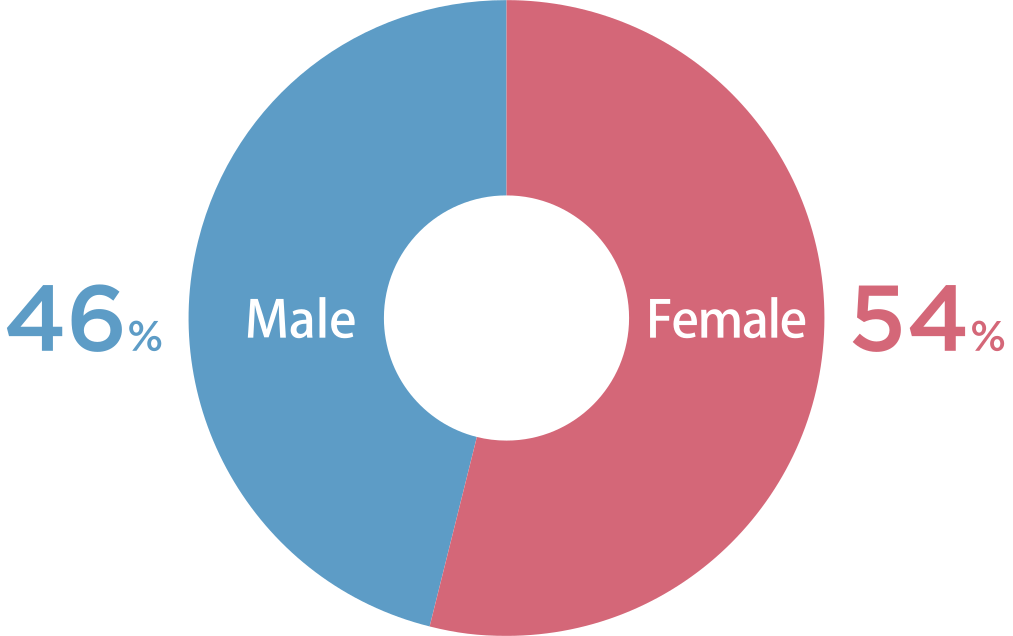
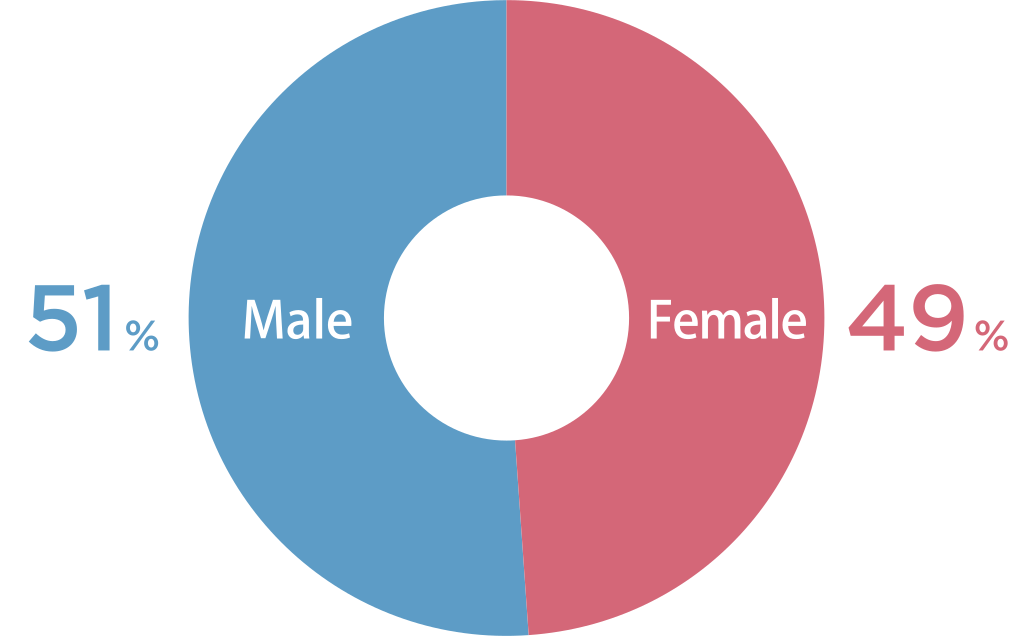
Ratio of men to women in our recruitment
Ratio of male to female new graduates hired in the past three years
Ratio of male to female mid-career hires in the past three years
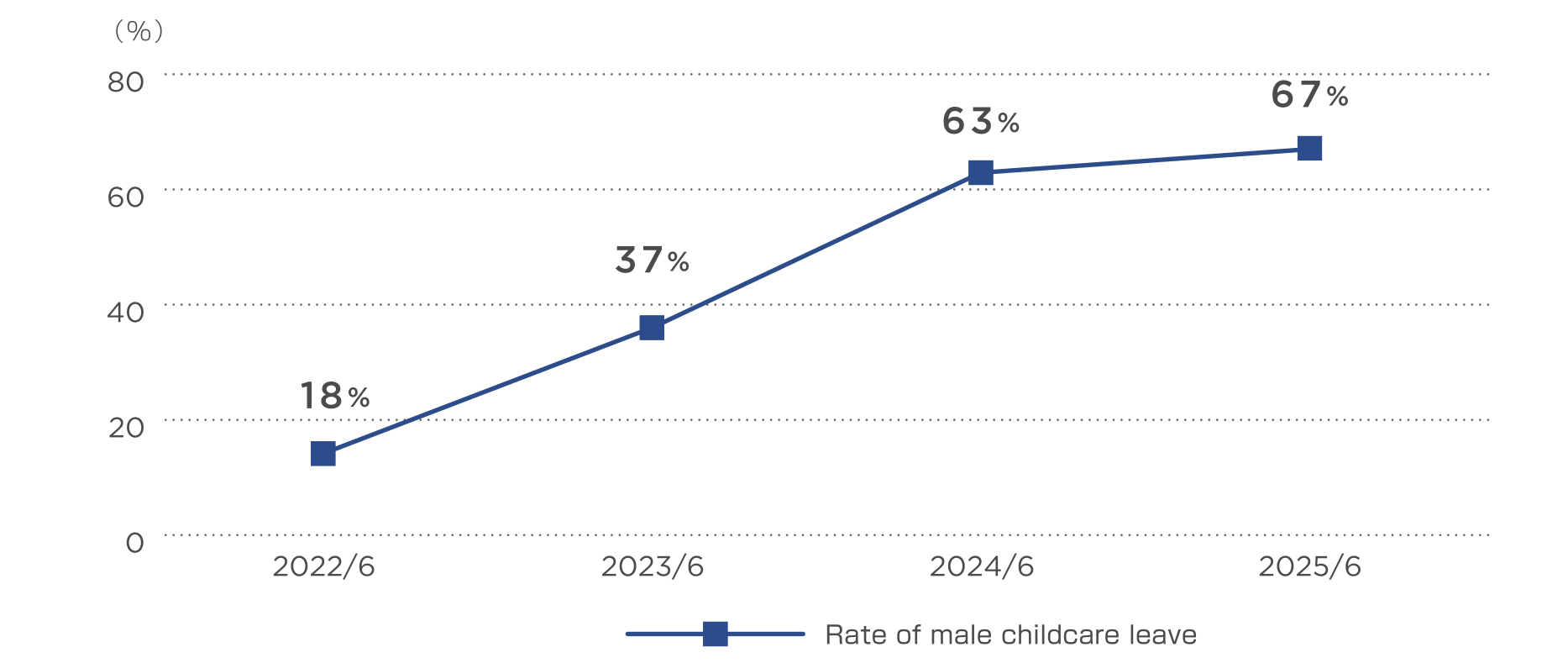
Original leave systems

Rate of male childcare leave
Introduction of remote working system
The Company has created a new remote working system that enables employees to work remotely at any time, without having to come to work, if they have to live in a location distant from their home office due to changes in their life stage or other reasons. The system aims to create an environment in which talented people at various life stages can establish a position and play an active role.
Support for balancing work and childcare
At Macromill, we have focused on creating an environment that is responsive to the social environment and changes in employee life stages so that each and every employee can work healthily for the long term. As part of this, we aim to establish a workplace that allows for a balance between work and childcare, establishing unique systems such as expanded eligibility for shortened work hours due to childcare (up to employees with children in their third year of elementary school) and supplying childbirth gift money.
We have also created a guidebook to assist with balancing work and childcare and support all employees thinking about balancing work and childcare and their superiors.

Support for employees to help
a flexible work environment and family care
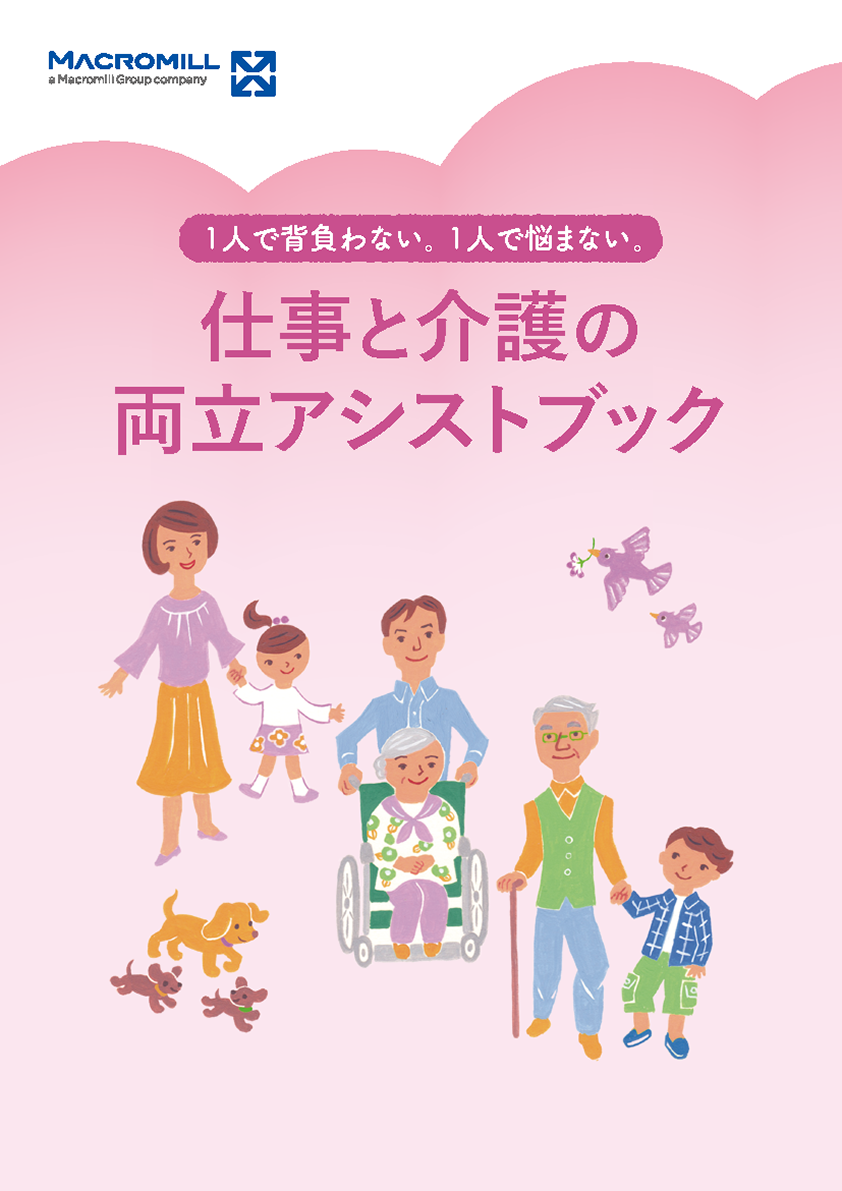
Macromill has acquired the Tomonin symbol from the Ministry of Health, Labour and Welfare for promoting the establishment of a workplace environment that makes it possible to balance work and nursing care responsibilities. We also created a guidebook to assist in balancing work and nursing care and are actively engaged in supporting this balance.
Basic Policy Regarding Human Rights
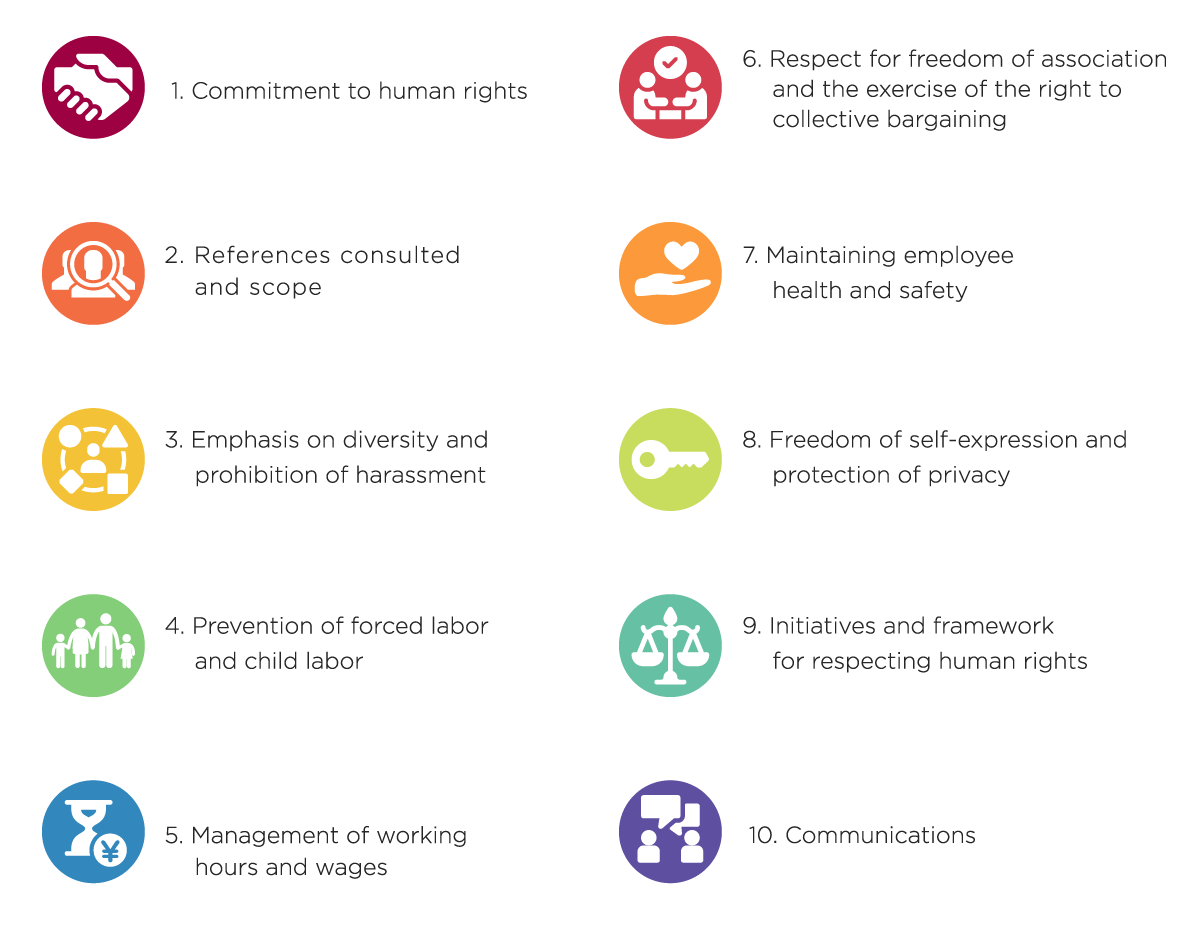
The Macromill Group has established a Basic Policy Regarding Human Rights that expresses our stance of respecting human rights through our corporate activities. By protecting and promoting human rights, we seek to build long-term relationships of trust with all stakeholders, including employees, clients, and shareholders. We will also share the values of respecting human rights in our relationships with business partners across the business value chain.
Components of the Basic Policy Regarding Human Rights
Number of consolidated employees of the Macromill Group
| 2022/6 | |
|---|---|
| Number of employees | 2,970 |
| Percentage who are women | 52% |
| Average age (years) | 37 |
| 2023/6 | |
|---|---|
| Number of employees | 2,155 |
| Percentage who are women | 54% |
| Average age (years) | 38 |
| 2024/6 | |
|---|---|
| Number of employees | 2,228 |
| Percentage who are women | 55% |
| Average age (years) | 35.6 |
| 2025/6 | |
|---|---|
| Number of employees | 2,262 |
| Percentage who are women | 44% |
| Average age (years) | 36.3 |
| 2022/6 | 2023/6 | 2024/6 | 2025/6 | |
|---|---|---|---|---|
| Number of employees | 2,970 | 2,155 | 2,228 | 2,262 |
| Percentage who are women | 52% | 54% | 55% | 44% |
| Average age (years) | 37 | 38 | 35.6 | 36.3 |
Macromill employees (non-consolidated)
| 2022/6 | |
|---|---|
| Number of employees | 1,185 |
| Percentage who are women | 49% |
| Average age (years) | 33 |
| Ratio of women among executive officers | 13% |
| Number of non-regular employees | 105 |
| Percentage of non-regular employees | 8% |
| Number of people with disabilities employed | 22 |
| Retirement rate* | 12% |
| 2023/6 | |
|---|---|
| Number of employees | 1,179 |
| Percentage who are women | 50% |
| Average age (years) | 33 |
| Ratio of women among executive officers | 0% |
| Number of non-regular employees | 116 |
| Percentage of non-regular employees | 9% |
| Number of people with disabilities employed | 21 |
| Retirement rate* | 10% |
| 2024/6 | |
|---|---|
| Number of employees | 1,186 |
| Percentage who are women | 51% |
| Average age (years) | 33.9 |
| Ratio of women among executive officers | 0% |
| Number of non-regular employees | 117 |
| Percentage of non-regular employees | 10% |
| Number of people with disabilities employed | 23 |
| Retirement rate* | 9% |
| 2025/6 | |
|---|---|
| Number of employees | 1,183 |
| Percentage who are women | 49% |
| Average age (years) | 34.8 |
| Ratio of women among executive officers | 0% |
| Number of non-regular employees | 114 |
| Percentage of non-regular employees | 9% |
| Number of people with disabilities employed | 23 |
| Retirement rate* | 8% |
| 2022/6 | 2023/6 | 2024/6 | 2025/6 | |
|---|---|---|---|---|
| Number of employees | 1,185 | 1,179 | 1,186 | 1,183 |
| Percentage who are women | 49% | 50% | 51% | 49% |
| Average age (years) | 33 | 33 | 33.9 | 34.8 |
| Ratio of women among executive officers | 13% | 0% | 0% | 0% |
| Number of non-regular employees | 105 | 116 | 117 | 114 |
| Percentage of non-regular employees | 8% | 9% | 10% | 9% |
| Number of people with disabilities employed | 22 | 21 | 23 | 23 |
| Retirement rate* | 12% | 10% | 9% | 8% |
- *Percentage of full-time employees who resigned for personal reasons
Provide an Opportunity to Challenge New Possibilities
Cultivating human resources through systematic training programs and autonomous rotations
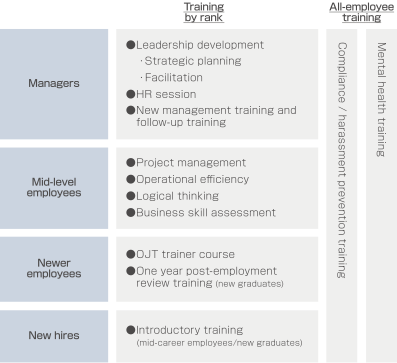
Recognizing that, in our business activities, enhancing the value of employees is directly linked to enhancing corporate value, we seek to cultivate human resources through systematic education programs and a voluntary job-rotation framework.
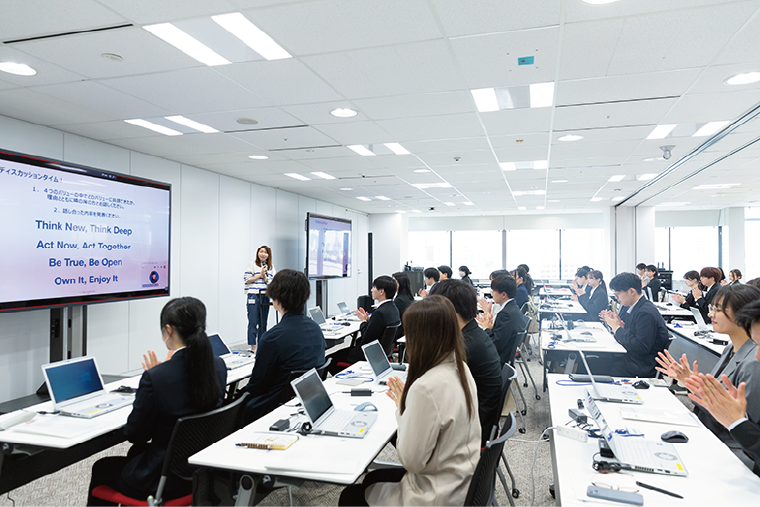
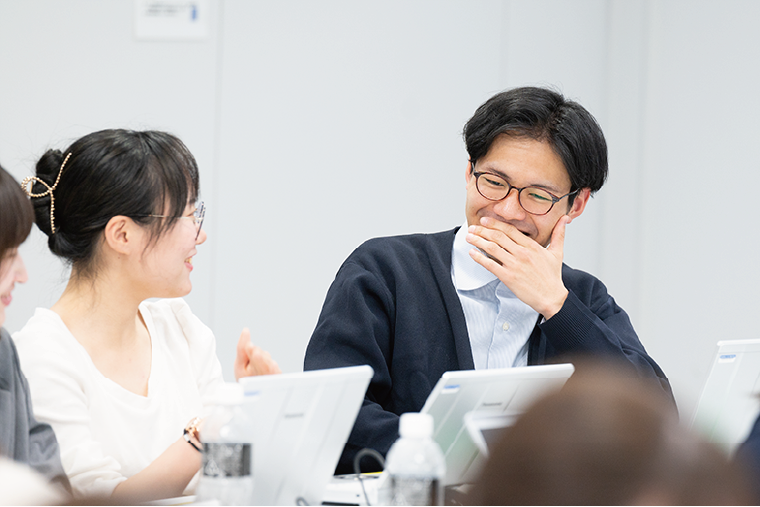
Training programs by rank
Career development promotion program
 Self-awareness
- Understanding one’s own strengths through the ‘Strengths Finder’
- Organization of will/can/must through the introduction of career sheets
- Self-career inventory utilizing a talent management system
(Visualization of experience and skills after joining the Company using generative AI tools)
 Job understanding
- Organization and disclosure of information regarding internal departmental roles, specific job descriptions, skills to be acquired, etc.
 Career training
- Changes in life stages and use of systems
- Conducting of seminars to learn about the careers of other employees
- Other onboarding support measures such as pulse surveys upon joining or transferring
In-house job posting and transfer system
We operate an internal open job posting and transfer system to promote the independent career development of our employees. We publish open positions each term, to which employees can freely apply. After a transfer is established following an internal screening process, work begins in the new department the next term. We hope that employees can gain new experience by embracing challenges, combining this with the experience and personal connections they have cultivated up to that point. In this way, they can grow into highly valued team members.
Knowledge sharing and feedback initiative to support growth
In addition to HR-led, Company-wide, rank-based training, we also have extensive training programs for each job category. In addition, various training materials are posted on the Company intranet to share training knowledge, thereby promoting understanding of specific roles and operations in other departments.
Various training materials on the in-house knowledge website Mill Navi

HR
- Induction training materials for new graduates (understanding the company/business skills/mindset/stance, etc.)
- OJT trainer programs
- Orientation training for mid-career hires
Sales Division
- Aimed at enabling employees to understand our services/acquire sales skills and support business operations
Researcher Division
- Marketing research basics/design and analysis courses, etc.
Others
- Training and knowledge related to use of AI
Feedback mechanisms to support growth
We operate a management by objectives (MBO) system with the aim of cultivating employees. We provide frequent and real-time feedback to help achieve the goals set jointly by managers and their team members. We use absolute evaluation standards not only to evaluate the extent to which employees achieve their individual goals, but also to make a comprehensive judgment by taking into account actual performance in the workplace, including work processes and the degree to which employees demonstrate the Group Values. We conduct an annual 360° feedback survey for managers, under which they receive feedback on their actions from superiors, subordinates, and peers.
Defining leadership competency
In order to ensure that the next generation of managers is nurtured and that the leadership development of managers is carried out in a comprehensive manner, we have created definitions of the leadership competencies that are required for each position. Manager training themes are established based on the definitions and they are otherwise used as shared indicators for nurturing the next generation of managers over the medium to long term.
Leadership competency items
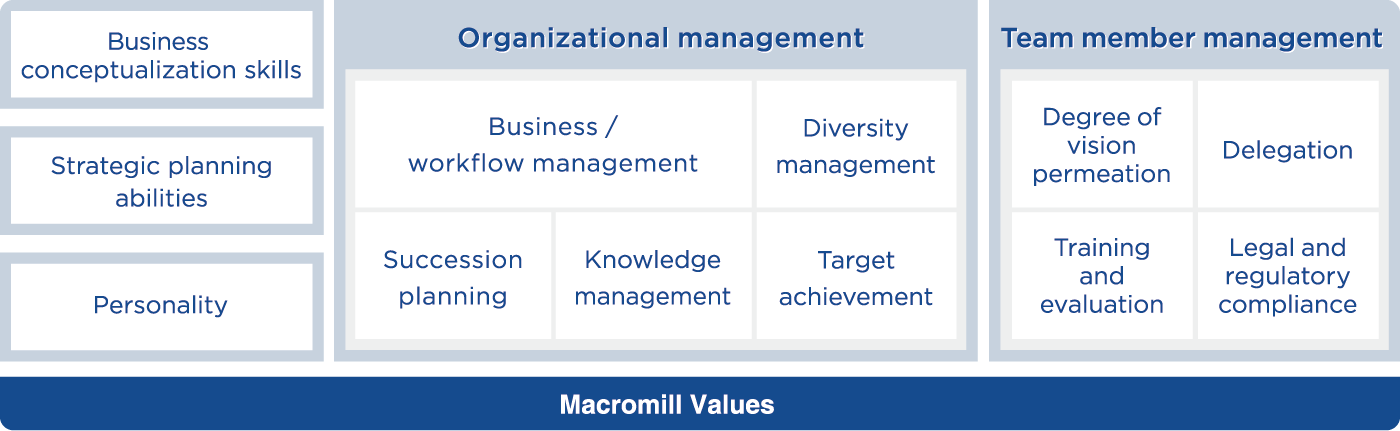
*For each of the above, there are five levels of position-specific competencies
Increase in total number of training participants and investment costs
In recent years, amid social demands for employee career autonomy and reskilling, the Company has been stepping up its efforts to expand the opportunities offered to employees for self-improvement and skills development and to increase investment expenditure. Compared with three years ago, the total number of employees taking part in training courses over the course of one year increased by 1.9 times and investment expenditure by 1.3 times. We will continue to provide useful growth opportunities for our employees and create an environment in which each and every one of them can push their own potential.
Educating Data-Native Talent
An environment that embodies a data culture and develops data-native talent
The Macromill Group’s vision is: “Build your Data Culture.” We contribute the data-driven decision-making of clients by acquiring and providing data ranging from consumer awareness to digital behavior, purchasing, and biology. Especially, in cultivating researchers, we have established a distinctive three-year training program to develop basic capabilities and, in addition to a wide variety of classroom-based education, conduct periodic testing to check that employee’s working knowledge is entrenched.
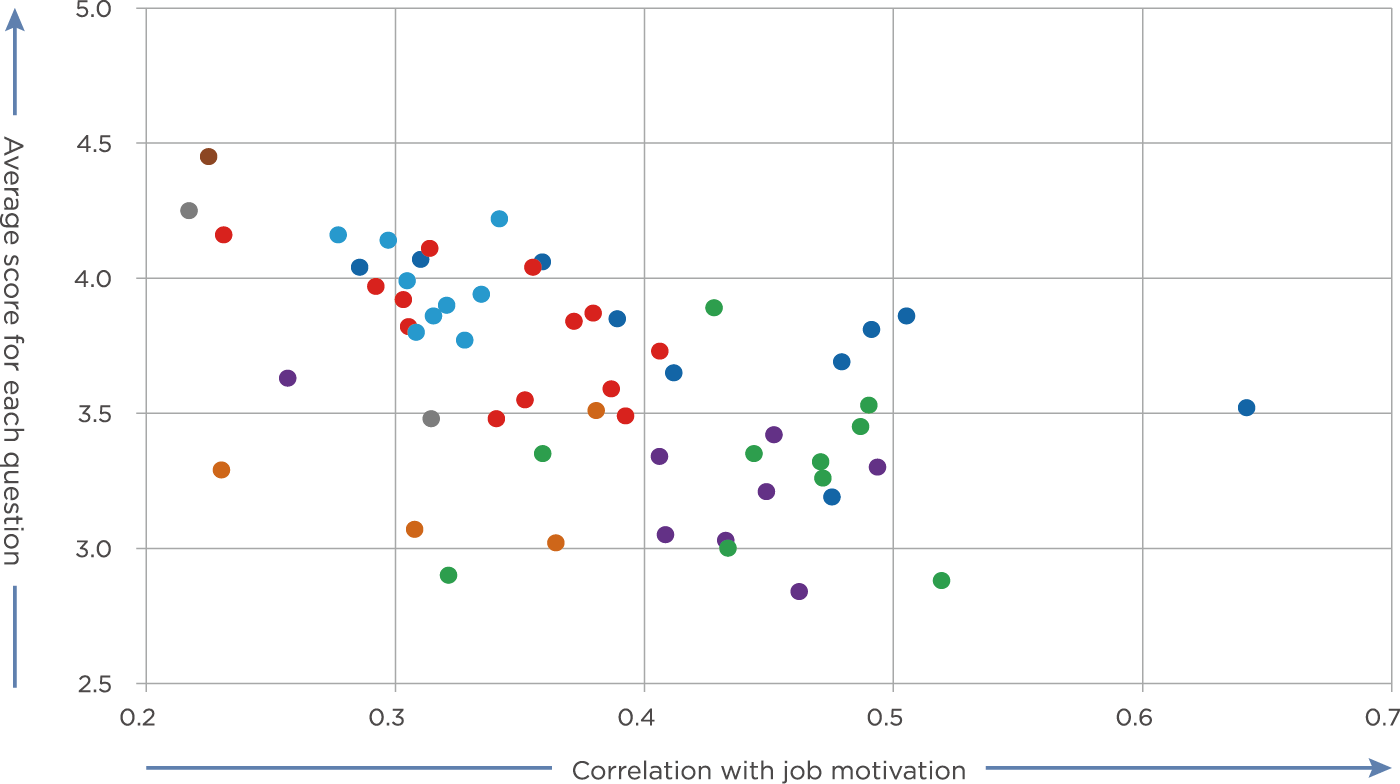
To address the demand for more sophisticated business analytics going forward, we are strengthening the development of analysts. We have developed an in-house online training program for aspiring employees. Furthermore, from July 2024, the Company began subsidizing the cost of acquiring the Japan Statistical Society Certificate from level 2 upward, thereby expanding support for employees to improve their data literacy. We are also pursuing numerous efforts to embody our data culture. Based on the results of the latest employee satisfaction survey, we are conducting an in-house analysis to enable more in-depth consideration of such a culture, which is informing the action plans being explored by each division.
Employee satisfaction survey correlation analysis
Recruiting and training data professionals
From 2017 to 2019, in collaboration with client companies, we held a public contest for data analysis-based marketing strategy planning. We carried out a hands-on program of using consumer data to propose solutions to the marketing issues of companies, receiving entries from around 2,500 students. Since 2020, we have also been offering summer and winter internships for students. By gaining experience in our data aggregation and analysis operations, roughly 800 students every year are honing their data literacy, which they can then apply to business.
Moreover, in July 2022, we transferred our data consulting business to SOUTH Inc., a marketing and consulting business, through an M&A. We then converted this into a subsidiary, renamed Eight Hundred, Inc., and have since continued to expand the consulting business. As of the end of June 2023, the company employed 77 data analysts (approximately 1.2 times the number from the previous year).
Postgraduate placement programs through industry-academia partnerships
Alongside our internal training programs, we provide a wide variety of employees with opportunities to hone their skills, including receiving training from invited lecturers from partner companies and development opportunities through industry-academia collaboration. Company-sponsored study programs with Shiga University’s Graduate School of Data Science, to which we have continuously dispatched employees since 2019, have enabled our data scientists to further deepen their capabilities and knowledge. From FY6/2026, the number of graduate schools to which employees are dispatched will be expanded and the recruitment method will be changed from recommendation by others to self-recommendation in order to widen the scope of opportunities for employees to develop their careers autonomously.
Placement locations (from FY6/2026 onward)
- Shiga University Graduate School of Data Science
- Yokohama City University Graduate School of Data Science
- Shiga University Master of Business Analytics (MBAN) Program
Our subsidiary Eight Hundred has also concluded an industry-academia collaboration in the area of data science with Hitotsubashi University and Tokyo University of Science, with the aim of further developing the data science field through joint research and the training of personnel who will lead the next generation.
External evaluations
Recognized as a 2025 Outstanding Organization of KENKO Investment for Health
Macromill has been recognized as a 2025 Outstanding Organization of KENKO Investment for Health by the Ministry of Economy, Trade and Industry and the Nippon Kenko Kaigi, in appreciation of our ongoing efforts to create an environment where every employee can work healthily and for the long term.
Outstanding Organizations of KENKO Investment for Health program
https://www.meti.go.jp/english/press/2025/0310_003.html
Received the 2025 Human Capital Management Quality award
As a company that conducts exceptional human capital management and information disclosure initiatives, Macromill received the 2025 Human Capital Management Quality award sponsored by the HR Technology Consortium, HR Research Institute (ProFuture Inc.), and Association to Confirm the Human Investment Value for Enterprise.
Human capital survey (Japanese only)
https://www.hrpro.co.jp/human_capital_survey/

An Organizational Culture
Where Employees Are Highly Motivated

Here we introduce Macromill’s unique culture. At Macromill, we are promoting support and culture-creation that enables employees to take on the challenge of their own potential.
More details (Japanese only)